Increase Deposits & Reduce Efficiency Ratios

What would a 2% improvement in your efficiency ratio mean for your institution? For many financial institutions, that 2% is the difference between maintaining the status quo and funding the next strategic initiative — a technology deployment, a new market expansion, or the investments that drive long-term growth.
The institutions that consistently outperform their peers aren't chasing every new trend. They're the ones that align operations, technology, and strategy around clear, disciplined priorities. This guide is built around 10 questions every banking executive should be able to answer. Use it as a framework for your next leadership conversation — or your next strategic planning workshop with Cook Solutions Group.
What a 2% Efficiency Ratio Improvement Actually Unlocks
Before diving into the questions, it helps to understand what's at stake.
Over 12.2% of financial institutions are currently operating above a 90% efficiency ratio. Even institutions performing within peer averages often have untapped capacity waiting to be unlocked.
Based on FI Navigator peer averages, here's what a 2% efficiency ratio improvement could mean annually — depending on your asset size:
The goal isn't radical disruption. The goal is disciplined advantage — removing friction from existing operations and aligning investments with clear strategic outcomes.
This guide provides a framework for evaluating three core areas:
- Operational efficiency — where friction is costing you margin
- Technology alignment — whether investments match strategy
- Growth positioning — how to capture deposits intentionally
The Framework: 10 Strategic Questions for Banking Leaders
These aren't hypothetical exercises. They're the questions that surface real gaps — and real opportunities — when a leadership team takes the time to answer them honestly.
What Would You Do With 2% Back?
Every institution has a different starting point, which is why benchmarking against peer institutions is essential. Without understanding your baseline, improvement efforts often lack focus.
A 2% improvement may appear incremental — but for many financial institutions, it unlocks meaningful strategic capacity. That margin could fund:
- Technology initiatives — deploy delayed platform upgrades and automation
- Market expansion — enter new geographies and underserved segments
- New service delivery models — pilot micro branches, ITMs, and hybrid service points
- Growth-focused staff — hire advisors dedicated to relationship building
The real question isn't whether a 2% improvement is possible. It's: what would your institution do with it?
Fraud Costs Are Rising — What's Your Prevention Plan?
Fraud is no longer a single event — it's a multi-channel campaign. Disconnected tools and reactive responses create gaps that translate directly into losses, reputational damage, and regulatory risk.
A modern fraud prevention strategy for financial institutions should include:
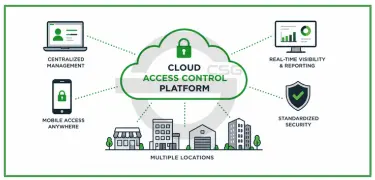
- A layered, unified security strategy — combining physical security, real-time alerts, analytics, video, and access control
- Smarter alarms, not more alarms — reducing alarm fatigue with managed, prioritized oversight and video verification
- Audit-ready documentation by design — linking alarms, access events, and video with clear accountability trails
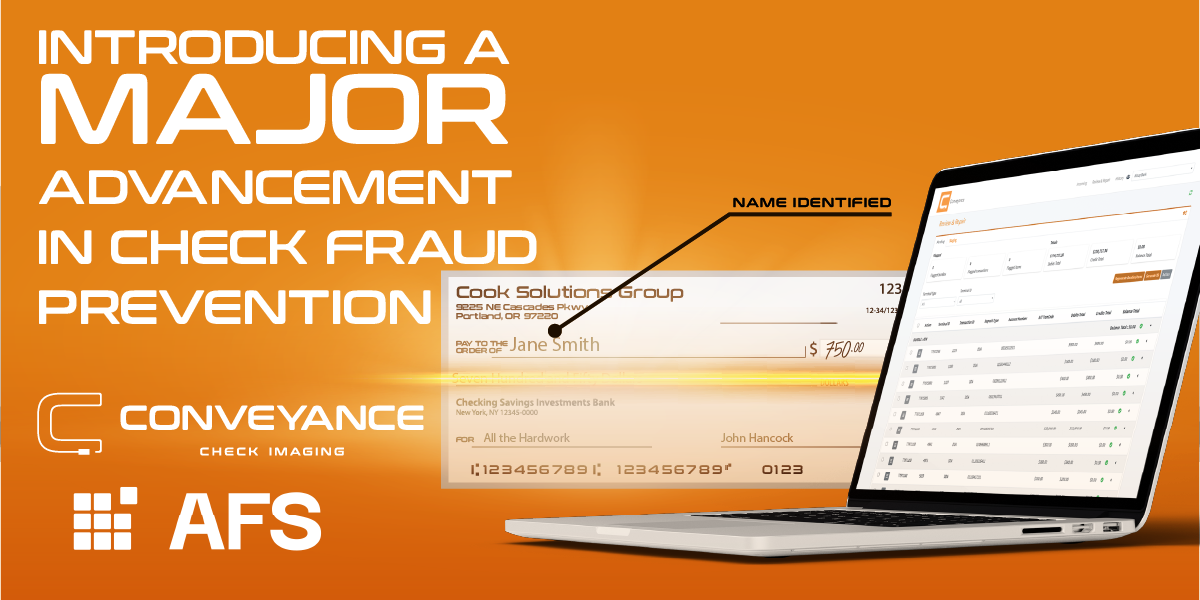
- Automated detection where criminals move fastest — fraud analytics for abnormal patterns and strengthened check/deposit workflows
- Reduced vendor fragmentation — consolidated solutions improve visibility, simplify compliance, and lower overhead
Explore CSG's dedicated Fraud Guide for Financial Security Professionals to benchmark your current controls and map a layered prevention plan.
Does Your Technology Strategy Match Your Capacity to Execute?
The financial services technology landscape is expanding rapidly. Most leadership teams are aware of available tools — digital banking platforms, advanced analytics, ITMs, automation, and operational management systems.
The real challenge isn't awareness. It's execution.
Internal teams are frequently consumed by compliance obligations, cybersecurity management, and maintaining legacy systems. Even well-planned strategic initiatives stall due to limited internal bandwidth.
Successful institutions address this through strategic resourcing — extending internal capabilities through trusted partners without adding permanent headcount.
Technology should always support a clearly defined objective. Whether that's deposit growth, operational efficiency, or improved customer experience, the technology must serve the strategy. Execution speed is often the true competitive advantage.
How Much Risk Can You Absorb in Branch Expansion?
Branch expansion has historically required significant capital, long timelines, and substantial operational overhead. Today, financial institutions have far more flexible options.

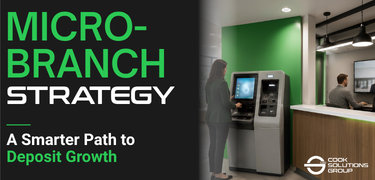
Micro-branches, ITM deployments, and hybrid service models allow institutions to test new markets with significantly lower risk. If a location proves successful, expansion can follow. If it doesn't, technology and resources can be redeployed elsewhere.
Branch strategy today is about deploying physical presence more strategically — not more broadly.
Can Technology Improve Customer Experience and Efficiency at the Same Time?
One of the most powerful impacts of technology is transforming how employees spend their time. Many branch staff members still spend the majority of their day processing routine transactions — time that could be redirected toward higher-value activities.
Technologies like cash recyclers, automation tools, and ITMs can dramatically reduce transaction processing time.
-When implemented effectively, these technologies shift employees from transactional processors to trusted advisors — spending more time advising customers, building relationships, identifying financial needs, and supporting complex service interactions.
Technology should enable more meaningful human interaction — not replace it.
Where Is Your Next Deposit Growth Actually Coming From?
Deposit growth has become one of the most significant strategic challenges facing financial institutions today. Consumers now maintain financial relationships with multiple institutions, fintech platforms, and digital tools. Institutions must be more intentional.

For many institutions, the most immediate growth opportunity is already in front of them — within their existing customer base. The average consumer maintains relationships with multiple financial providers. Capturing a greater share of those relationships can drive meaningful deposit growth before a single new customer is acquired.
Growth comes from rethinking how value is delivered — not just where it's marketed.
Can the Average Consumer Clearly Explain What Makes You Different?
Inside the banking industry, institutions often believe their differences are obvious. Outside the industry, those differences are rarely clear.
If you asked the average consumer to explain the difference between two financial institutions, most would struggle. Claims like "better service" or "stronger relationships" are used by nearly every institution in the market.

True differentiation is built through:
- Convenience and access — locations, hours, service models
- Specialized expertise — industries, communities, specific segments
- Technology experience — simplifying banking for customers
- Unique delivery models — ITMs, micro branches, hybrid service points
If your leadership team can't articulate your institution's differentiation in simple language, customers won't be able to identify it either. Clarity drives growth.
Are You Getting Full Value From the Vendors You Already Have?
Vendor creep happens gradually. One department adopts a tool to solve a specific problem. Another adds a separate solution for a different need. Over time, the organization accumulates dozens of vendors — each introducing additional complexity, cost, and compliance overhead.

Here's the question worth asking before adding another vendor:
Can we solve this problem with technology we already own?
Often the capabilities needed to address new challenges already exist within platforms the institution currently uses. Video surveillance platforms, for example, can provide operational analytics — customer traffic patterns, service insights, branch heat mapping — that many institutions aren't yet leveraging.
Maximizing existing partnerships often improves efficiency while reducing costs.
When Did Your Leadership Team Last Align on Strategy Together?
Technology, regulations, and customer expectations evolve continuously. Decisions made several years ago may no longer align with your institution's current strategy.
Strategic workshops provide a structured environment for leadership teams — alongside trusted industry partners — to examine operational priorities, technology strategy, and long-term growth objectives together.
A critical and often overlooked piece: do your mid-level managers clearly understand the institution's strategic direction?
Strategy fails when it stays confined to executive discussions. Mid-level managers make daily operational decisions that shape capital allocation, technology adoption, and customer experience. Without clear communication of strategic priorities, those decisions may unintentionally conflict with broader organizational goals.
Alignment reduces friction. Communication prevents strategic drift. Clarity drives execution.
Are Your Departments Solving Problems Together — or Creating New Ones Separately?
Departments often adopt technologies independently to solve specific operational problems. Over time, these decisions create fragmented systems that increase complexity and costs across the organization.

When departments collaborate and share visibility into technology capabilities, consolidation opportunities emerge that improve both efficiency and customer experience.
Strategic leadership requires an institutional perspective — not just a departmental one.
The Discipline of Incremental Advantage
Sustainable competitive advantage in banking rarely comes from dramatic transformation. It comes from disciplined execution across multiple departments — over time.
Institutions that align efficiency, technology, growth strategy, and leadership communication create incremental advantages that compound. The little things add up.
A 2% improvement may appear small. But for many institutions, that 2% is the difference between maintaining the status quo and making the next strategic investment.