What would you do with $144,000 back over the next three years?
For a typical commercial facility running about 50 readers, that's the gap between maintaining a legacy on-premise access control system and moving to the cloud — roughly $189,000 versus $45,000 over three years, with ongoing savings of about $35,000 every year after.
Most legacy access control systems don't fail outright. They keep securing doors while quietly draining budget through firmware updates, IT labor, server maintenance, emergency service calls, and manual provisioning — costs that compound year after year.
This guide breaks down the hidden costs of legacy access control, models the real ROI of migration, and outlines how banks, credit unions, hospitals, data centers, and commercial facilities can modernize in phases without disruption.
Access control, also known as Card Access, Proximity Card Systems, entry control, & Key Card Systems, is now central to physical security, compliance, and operational continuity. Yet many organizations in high-security industries still rely on aging on-premise systems that are costly to maintain, difficult to manage, and limited in visibility and reporting.
For all types of commercial facilities such as banks, credit unions, hospitals, data centers, and truly any business, these limitations create real risk. Legacy access control can increase maintenance costs, slow incident response, complicate audits, and leave gaps in credential management and policy enforcement.
Cloud-based access control offers a more modern operating model; one that centralizes administration, improves visibility, supports stronger audit trails, and reduces the burden of maintaining outdated infrastructure. These platforms make it easier to scale across locations, standardize security practices, and improve day-to-day efficiency.
Migration is often more achievable than many organizations expect. With the right plan and partner, organizations can transition in phases, maintain continuity, and modernize access control with minimal disruption.
Why Access Control Modernization Matters
Access control has evolved beyond a facility-level function. It now plays a central role in how organizations manage risk, enforce policy, and maintain operational continuity across distributed environments.
In high-security industries, access control directly impacts:
Legacy environments were not designed to support this level of coordination. As organizations grow, expand locations, or face increased regulatory pressure, disconnected and locally managed systems introduce friction, inconsistency, and unnecessary risk.
Modernizing access control is less about replacing hardware and more about establishing a scalable, connected foundation that supports real-time decision-making and long-term operational resilience.
The Hidden Cost of Legacy Access Control
Legacy systems often appear functional on the surface, but their limitations compound over time in ways that impact both cost and performance.
These factors introduce hidden costs in the form of labor, delayed response, inconsistent policy enforcement, and unplanned service events.
Over time, organizations often find they are maintaining complexity rather than managing security, investing more resources into sustaining outdated systems instead of improving outcomes.
Fraud Risks and Security Vulnerabilities
Access control gaps rarely exist in isolation. They often surface during moments of operational transition; employee turnover, vendor access, after-hours activity, or multi-site coordination.
Common exposure points include:
- Delayed or inconsistent deprovisioning across systems
- Shared or easily duplicated credentials
- Lack of real-time visibility into access events
- Incomplete or difficult-to-interpret audit trails
These challenges increase the likelihood of unauthorized access, complicate investigations, and slow response times when incidents occur.
In regulated environments, the impact extends beyond security. Weak access governance can create compliance risk, audit challenges, and reputational exposure.
Modern access control reduces these risks not just with stronger technology, but through improved visibility, faster control, and better alignment with broader security operations.
What Cloud-Based Access Control Changes
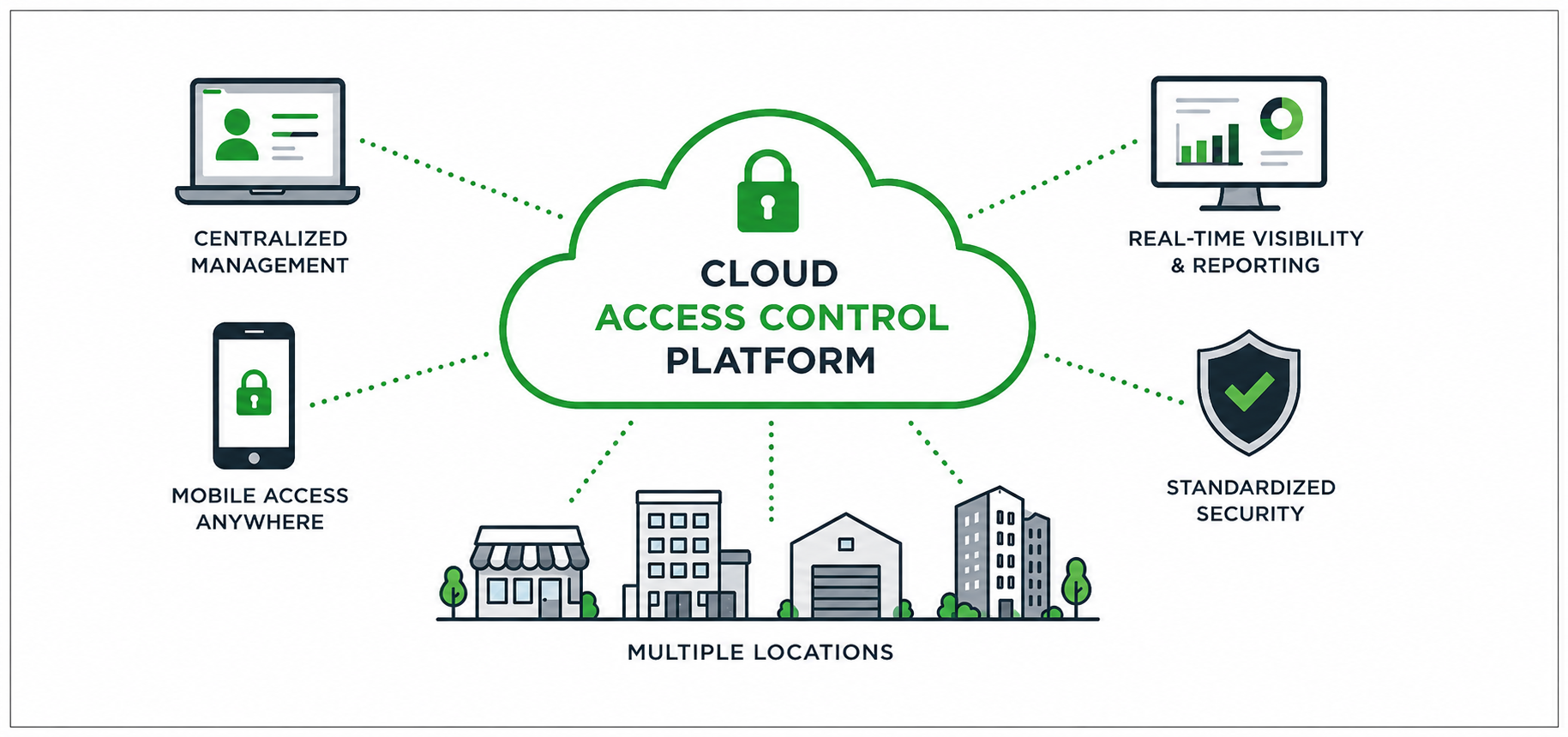
Cloud-based access control shifts the operating model from localized system management to centralized, real-time control.
This change impacts how organizations manage security at scale:
Rather than managing individual systems, organizations gain the ability to manage environments as a whole.
This creates a more agile security posture where updates, decisions, and responses can be executed instantly and consistently, regardless of location.
Mobile Access at Your Fingertips
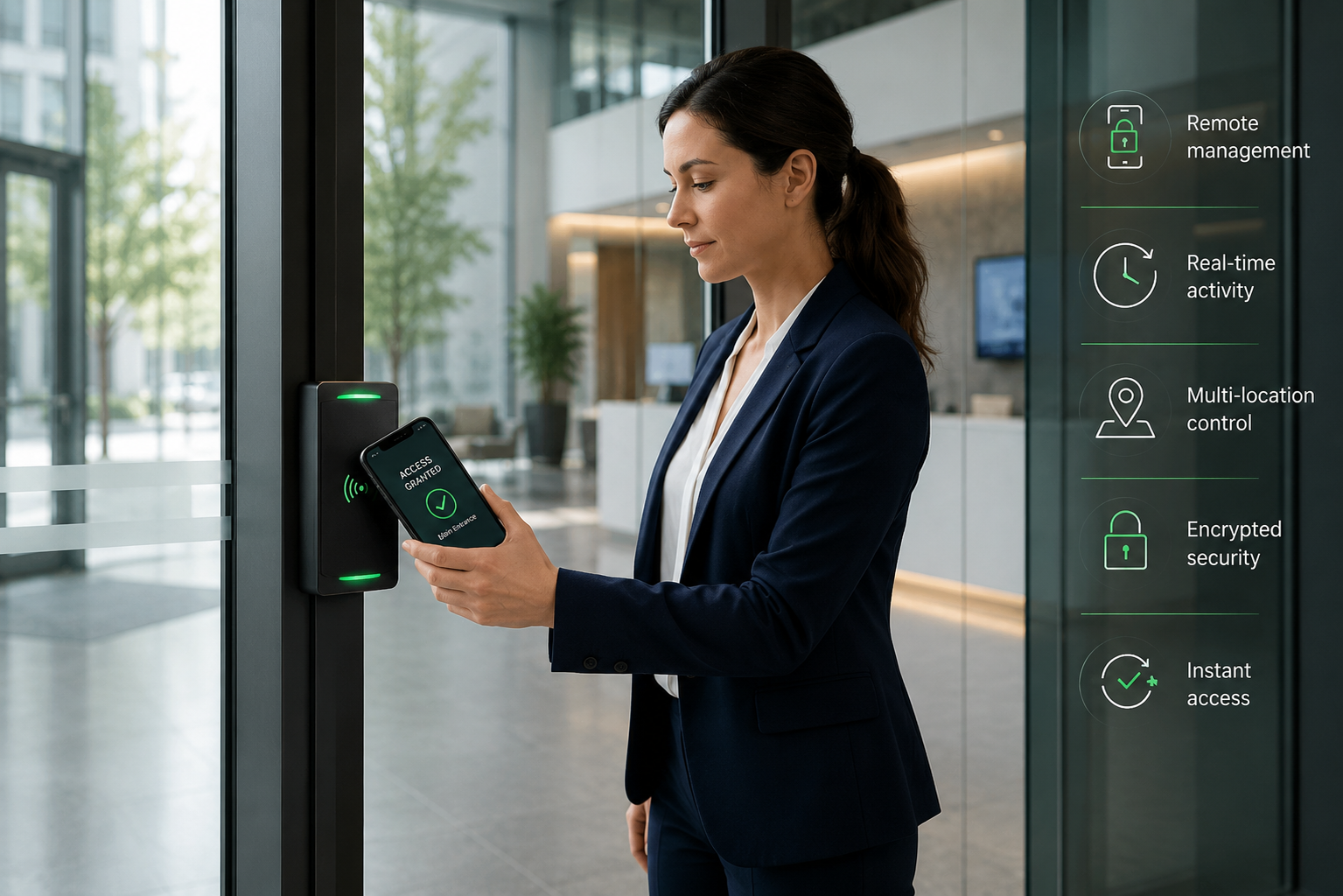
Modern cloud-based access control platforms allow organizations to manage security directly from a mobile device improving both operational efficiency and user experience.
Cloud Access Control, like Genea, enables administrators to remotely issue, revoke, and manage credentials in real time while employees can securely access doors, gates, and elevators using smartphones or wearable devices. This reduces dependency on physical badges and allows organizations to respond faster to operational and security needs.
Key advantages of mobile-enabled access control include:
Mobile credentials enhance both security and convenience by turning the smartphone employees already carry into a secure access credential. Unlike traditional badges or keys, mobile credentials are far less likely to be shared, forgotten, or left unattended, as most people keep their phones with them at all times. This reduces the risk of unauthorized access while eliminating the cost and administrative burden of replacing lost or stolen badges.
Mobile credentials also enable instant remote provisioning and revocation, allowing administrators to grant or remove access in seconds without requiring an in-person badge exchange, improving both operational efficiency and overall security.
Cook Solutions Group helps organizations extend the value of cloud-based access control through mobile-first deployments, managed services, and integrations with video, alarms, and remote locking solutions, creating a more connected and responsive security environment.
The Business Case for Cloud Access Control
The value of modernization is most clearly seen in operational efficiency and long-term cost control.
Cloud-based access control supports:
Equally important, it positions organizations to adapt more easily — whether expanding locations, integrating additional systems, or responding to new regulatory requirements.
The result extends beyond cost savings, delivering a more predictable and scalable operating model.
ROI in Action: The Financial Impact of Cloud Access Control
For many organizations, the decision to modernize access control begins with security, but the long-term value is commonly realized through operational savings and reduced administrative burden.
The model below is based on a typical commercial facility with approximately 50 readers, cloud-based access control can significantly reduce both upfront and ongoing expenses by eliminating server infrastructure, reducing maintenance requirements, simplifying administration, and enabling remote system management.
Beyond direct cost reductions, organizations gain measurable productivity improvements across security, facilities, IT, HR, and compliance teams.
15 Cloud Benefits That Save Time & Money at Zero Added Cost
Industry Considerations
While the need for modernization is consistent, how access control is applied varies by environment.
Require strong auditability, rapid credential changes, and standardized security across branches.
Prioritize controlled access to sensitive areas and fast role-based adjustments.
Demand strict segmentation, visibility, and uptime across critical infrastructure.
Benefit from simplified multi-site management and improved tenant and contractor coordination.
Across all industries, the common thread is the need for centralized control paired with flexibility at the local level.
Modern access control supports both — enabling organizations to enforce consistent policy while adapting to the operational realities of each site.
How to Migrate Legacy Access Control to the Cloud
Migration is most effective when approached as an operational improvement initiative rather than a one-time system replacement.
A structured approach typically includes:
- Assessment of current infrastructure and workflows to identify inefficiencies and risk areas
- Phased implementation to prioritize high-impact locations or use cases
- Policy and governance improvements during transition to eliminate legacy inconsistencies
- Continuity planning to ensure minimal disruption during deployment Importantly, migration also creates an opportunity to align access control with other systems and processes — setting the stage for future integrations, improved visibility, and more coordinated security operations.
Organizations that approach migration strategically are able to modernize without disruption while building a more scalable and connected foundation for the future.
Expanding the Value of Access Control Through Integration
Modern cloud-based access control platforms provide a strong foundation for managing credentials, doors, and policies. However, organizations operating in high-security and multi-site environments often require more than access control alone to achieve full visibility, faster response, and long-term operational efficiency.
Cook Solutions Group helps organizations extend the value of their access control investment through a series of strategic integrations and managed service enhancements. These capabilities are not required to deploy a successful access control system, but they represent high-impact opportunities to create a more connected, intelligent, and fully supported security environment.
Building a Connected Security Ecosystem
A Connected Security Roadmap
Organizations don’t need every capability on day one. Expand strategically as your security needs evolve.
Typical progression:
- Cloud-Based Access Control — Build a centralized security foundation
- Video Integration — Add visibility and event verification
- Alarm Monitoring — Strengthen response and escalation
- Remote Locking — Expand security coverage
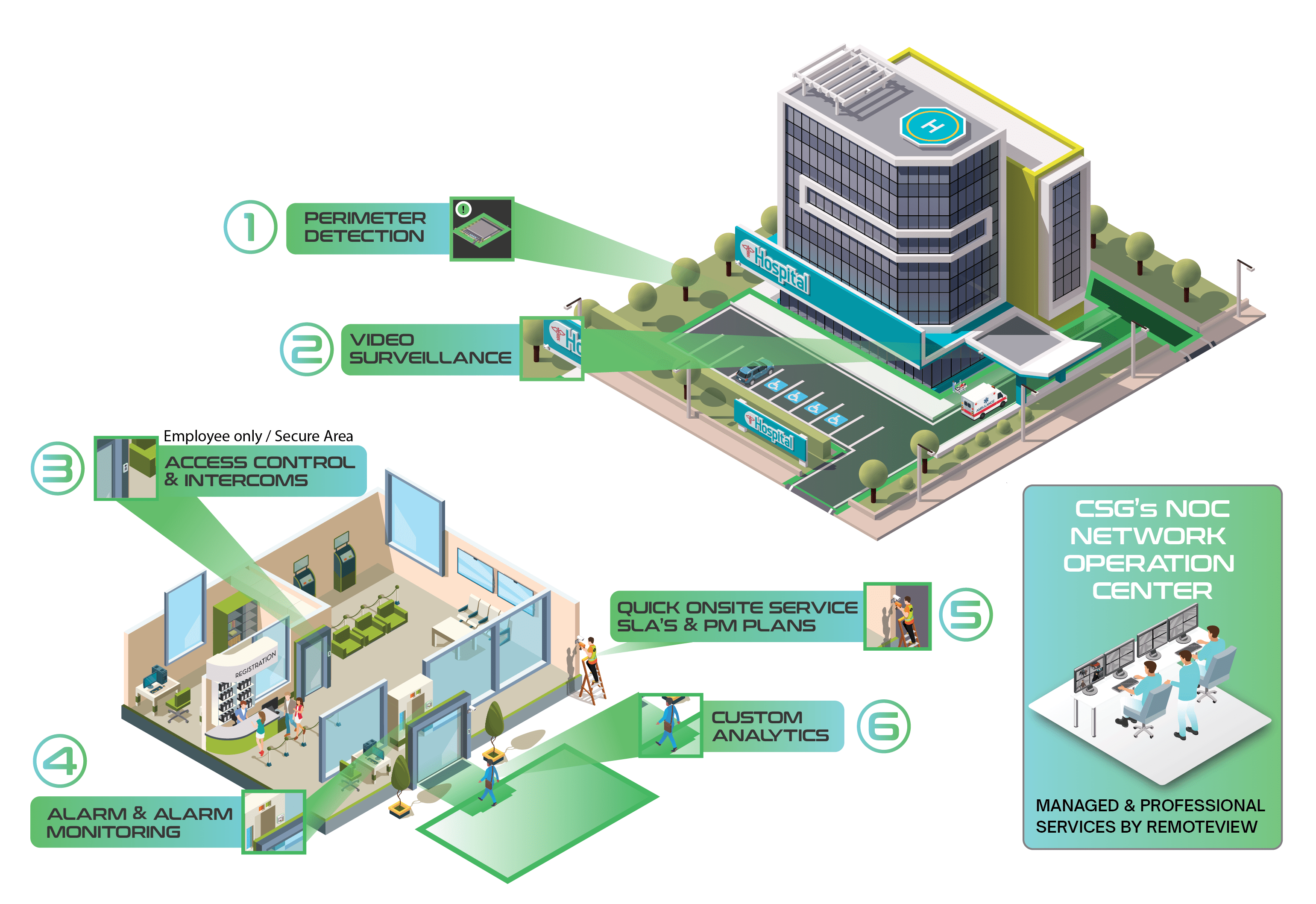
- Managed Services & RemoteView — Optimize performance and reliability
Build a connected security ecosystem that grows with your organization.
Selecting the Right Integrations & Service Partner
Modernizing access control is not solely a technology decision. The long-term success of the system depends heavily on the partner responsible for guiding the transition, integrating adjacent systems, and supporting the environment over time.
As access control becomes more connected to video, alarms, remote locking, and broader operational systems, the role of the partner expands beyond installation. Organizations should evaluate partners based on their ability to support a fully integrated and continuously managed security environment.
Key considerations include:
Experience in Complex Environments
The partner should have a proven track record in regulated, multi-site, and high-security environments where uptime, compliance, and consistency are critical.
Integration and Expansion Capability
Access control should never operate in isolation. The right partner integrates video, alarm monitoring, remote locking, and other technologies to improve visibility and response as your security needs evolve.
Managed Services Maturity
Ongoing performance depends on proactive monitoring, maintenance, and support. The right managed services partner helps reduce downtime, improve reliability, and ease internal workloads.
Scalable Deployment Approach
Migration and expansion should be structured and phased, allowing organizations to prioritize high-impact areas while maintaining operational continuity.
Operational Alignment
Beyond technical expertise, the partner should understand how access control impacts day-to-day operations from onboarding workflows to incident response and help align the system with those realities.
The most effective outcomes come from partners who can support not only the initial deployment, but the ongoing evolution of the system as organizational needs change.
Why moving to Cloud Access Control is the best strategy
Legacy access control systems often continue operating long after they stop delivering meaningful value. While they may still perform basic functions, they frequently introduce inefficiencies, limit visibility, and create gaps in response and coordination.
Cloud-based access control provides a more flexible and scalable foundation. However, the full value is realized when it is treated as part of a broader, connected security strategy; one that integrates visibility, response, and ongoing system support.
By combining centralized access control with thoughtful integration and managed services, organizations can:
- Improve operational consistency across locations
- Strengthen visibility into access activity and events
- Reduce response times and service disruptions
- Lower long-term support and infrastructure costs
- Create a more adaptable and future-ready security environment
Modernization is not simply about replacing outdated systems. It is an opportunity to establish a more coordinated, resilient, and scalable approach to physical security.








.png)