Manufacturing sites have a different security problem than offices or retail. You have moving equipment, multiple shifts, contractors, high-value tools, controlled materials, and areas that are dangerous even when nothing “criminal” is happening. On top of that, many plants now carry serious intellectual property risk, like proprietary processes, prototype parts, product specs, and customer designs.
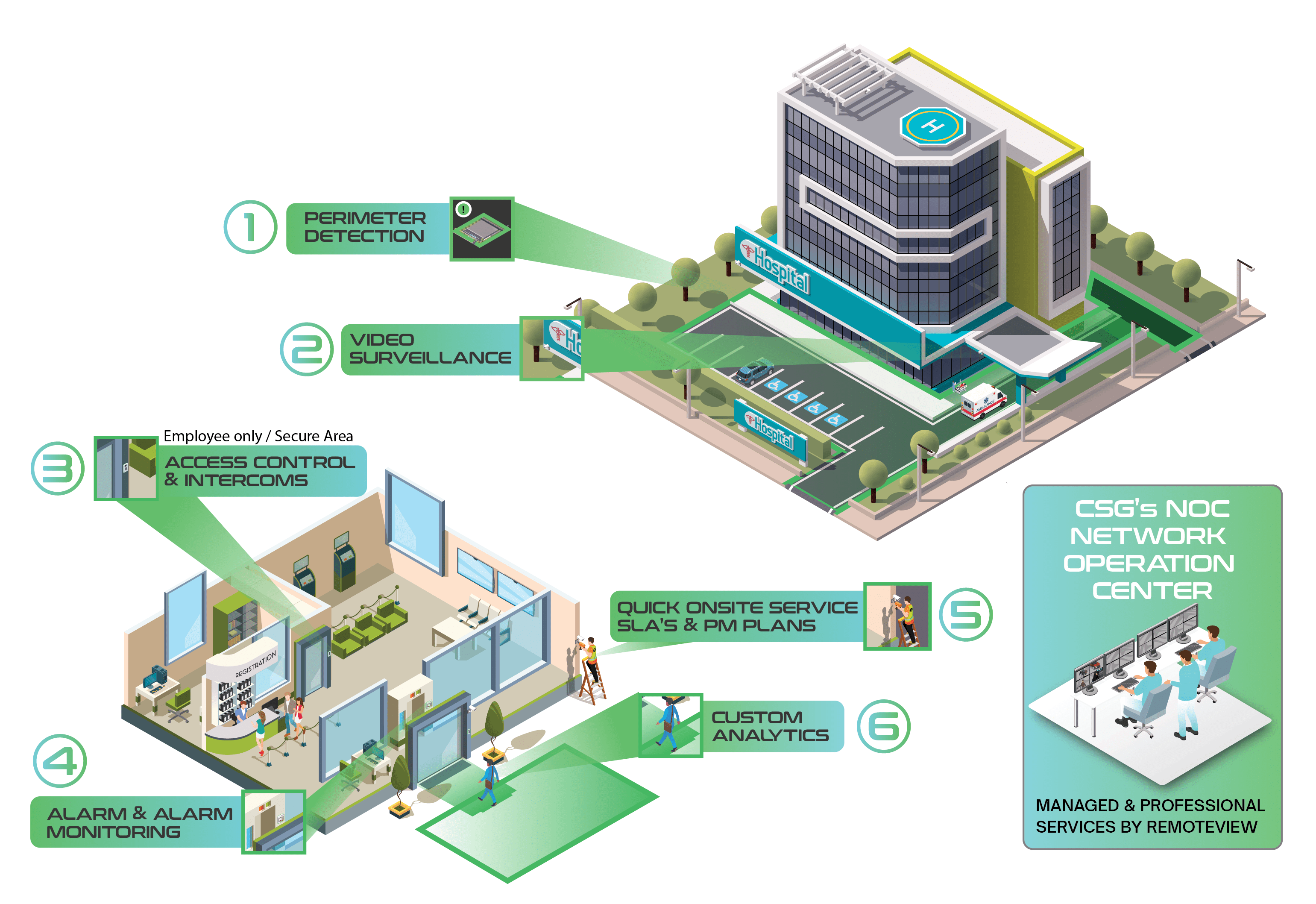
The best manufacturing security programs are not built as a pile of standalone systems. They are designed as an integrated environment where access control, video, alarms, intercoms, and monitoring work together to prevent incidents, reduce response time, and create clean evidence when something goes wrong.
This article breaks down what that looks like in practice, with a focus on outcomes: protecting people, protecting IP, and protecting equipment uptime.
Why manufacturing security is its own category
If you are new to manufacturing security, it helps to understand why “basic building security” often fails in plants:
That is why manufacturing security needs to be both tight and operationally realistic.
Start with a practical threat model, even if you have never done one
A threat model is simply a list of the most likely ways your facility could experience harm or loss, plus where those scenarios can happen. You do not need to be a security expert to build a useful one.
Once you identify the top scenarios, you can build a security design that blocks them with purpose.
Integrated systems, what “integration” actually means
“Integrated” should not mean “everything is connected because it can be.” It should mean the systems work together to support three real outcomes:
Protecting people: safety-driven security controls that still work on the floor
When people are the priority, security needs to be tightly aligned with safety leadership. The most effective approach is to use integrated systems to keep people out of danger zones unless they are authorized, trained, and scheduled to be there.
1) Zone-based access control for hazardous and restricted areas
Context that matters: most manufacturing incidents tied to unauthorized entry are not “criminal.” They are a person taking a shortcut allowing access to a space they should not enter.
High-impact zones to protect:
- Electrical rooms, MCCs, server and control rooms
- Chemical storage and dispensing
- Confined space access points
- Tool cribs, maintenance cages, and lockable spares rooms
- Machine cells with guarding and safety constraints
What good access control looks like:
- Role-based permissions, not “everyone gets in”
- Time schedules that match shifts and approved work windows
- Audit logs that can prove who entered and when
2) Video that supports safety response, not just security review
In a plant, video is often needed to answer safety questions quickly:
- Did a near-miss occur?
- Was PPE worn?
- Was the right procedure followed before a machine start or restart?
- Did someone enter a restricted cell?
The key is camera placement that supports decisions:
- Wide context views for area awareness
- Close enough views to see behaviors that matter, like door usage or entry points
3) Duress, emergency communication, and lockdown fundamentals
Plants should not rely on “call the front desk” during serious events. If you have a workplace violence concern, a medical emergency, or a hazardous release, speed matters.
Practical integrated controls:
- Duress buttons at reception, cash handling, and key supervisor stations
- Mass notification that reaches people on the floor, not just email
- Defined lockdown zones, not necessarily whole-building lockdown
- Clear response playbooks by shift, with escalation rules
The goal is clarity, not complexity. In emergencies, the most valuable system is the one people actually use correctly.
Protecting IP: keep sensitive processes and information from walking out the door
Manufacturing IP often lives in places that do not look like “data,” like tooling, fixtures, sample parts, test results, and process settings. Protecting it is as much about controlling space and behavior as it is about securing computers.
1) Segmentation of R&D, labs, and prototype areas
Context: if your plant has engineering and production under the same roof, it is easy for access to drift into “everybody goes everywhere.”
Strong IP protection starts with:
- Separate access groups for R&D, QA labs, and prototype rooms
- Visitor restrictions that prevent wandering, even briefly
- Escort rules that are actually enforceable in the system
2) Visitor management that is tied to access control and video
Visitor sign-in alone is not enough if visitors can enter sensitive areas or if escort rules are informal.
What an integrated approach gives you:
- Visitor badges that are time-limited and zone-limited
- A record of who approved the visit
- Camera visibility at entrances and sensitive corridors
- Logs that prove escort compliance when it matters
3) Anti-photography expectations and enforcement
Many facilities have “no photos” signs, but no consistent enforcement. The point is not to police everyone. The point is to reduce casual exposure and make intentional IP theft harder.
Practical steps:
- Clear signage and policy at the point of entry, not buried in a handbook
- Sensitive zones clearly labeled, with controlled access
- Use video and staff training to address repeat issues consistently
4) After-hours access monitoring for sensitive areas
After-hours is where IP risk often shows up because fewer leaders are present and odd access is easier to explain away.
High-value control:
- Alerts for access to engineering or lab areas outside normal schedules
- Video verification tied to those access events
- A simple escalation rule, such as verify, then notify on-call leadership
Protecting equipment and uptime: security controls that reduce downtime risk
Designing the perimeter for manufacturing realities
Perimeter security in manufacturing cannot assume a neat office environment. You have fences, yards, loading zones, and sometimes multiple entry points for vehicles, employees, and contractors.
1) Separate flows for people and vehicles
A common failure is mixing all traffic into one loosely controlled entry.
Better design principles:
- Employees enter through a controlled pedestrian entry with clear badge rules
- Trucks enter through a controlled gate with verification steps
- Contractors and visitors have a distinct process, not “use the side door”
2) Detection that matches the site, weather, and activity
Plants often deal with wildlife, wind, forklifts near fences, and changing yard layouts. That means detection needs to be tuned to reduce false alarms.
Common approaches:
- Gate monitoring and exception logging
- Video analytics in stable areas where cameras have reliable views
- Perimeter sensors where fences are the primary barrier
- Strong lighting and sightlines to support both cameras and patrols
3) Gate intercom and remote verification
When the gate can talk to the access system, you can reduce delays and maintain control without staffing every point.
Examples of useful integration:
- Driver arrives, calls the gate, staff verifies, access granted
- After-hours delivery, verification happens remotely with video
- Exceptions logged for review, not forgotten
The control room concept: central visibility without central bottlenecks
You do not need a fancy command center for integrated security. You need a workflow where the right people can see and act quickly.
What centralized visibility should provide
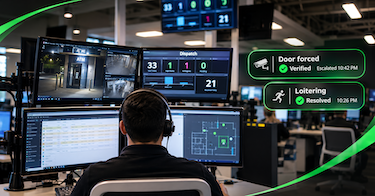
- A single place to verify door and alarm events with video
- Clear escalation by severity, time, and zone
- The ability to dispatch, document, and preserve evidence quickly
The most important part is ownership
If nobody owns alerts by shift, alarms become background noise. Define owners:
- Security or monitoring partner for verification
- On-site supervisors for operational follow-through
- Facilities or maintenance for equipment health
- Leadership for policy enforcement and exception review
KPIs that show whether your manufacturing security program is improving
Manufacturing security should be measurable, and the metrics should connect to outcomes.
People and safety metrics
- Unauthorized entry attempts to restricted zones
- Door held events in hazardous areas
- Verification-to-response time for high-severity alerts
- Duress or emergency activation response time
IP protection metrics
- Visitor exceptions, like unbadged visitors or expired badges
- After-hours access events to engineering, labs, and QA
- Repeat policy violations in sensitive zones
Equipment and uptime metrics
- Access anomalies for tool cribs and spares rooms
- Forced door events to control rooms and IT closets
- Shrink indicators tied to shipping or scrap areas
- Camera uptime and retention in critical zones
Systems health metrics
- Percentage of critical doors reporting correctly
- Open service tickets and average time to repair
- Recording retention actual versus policy
- Alarm false-positive rate by zone
If your KPIs trend in the right direction, you are reducing risk. If they spike, you have an early warning.
A practical rollout plan that respects production schedules
Most manufacturing facilities succeed with a phased approach. It keeps the project manageable and reduces disruption.
Phase 1: Stabilize and standardize (2 to 6 weeks)
- Confirm your threat model and priority zones
- Fix camera blind spots and ensure retention meets your needs
- Lock down hazardous area access with role-based permissions
- Define escalation rules and shift ownership
Phase 2: Strengthen edges and high-value zones (1 to 3 months)
- Gate workflows and intercom verification
- Tool crib and spares room access control
- Visitor management tied to credentials and time limits
- After-hours monitoring for IP-sensitive areas
Phase 3: Integrate for speed and consistency (3 to 9 months)
- Tie access events to camera bookmarks and verification views
- Add analytics where they reduce search time or improve response
- Establish KPI reviews and continuous improvement routines
- Commission, test, and document procedures so they survive staff changes
Quick checklists
People protection checklist
- Hazardous zones are access-controlled by role and schedule
- Door forced and door held alerts exist for critical doors
- Cameras cover entry points to restricted areas with usable views
- Emergency escalation is defined by shift, with clear owners
- Duress and notification tools are placed where they are actually needed
IP protection checklist
- R&D, labs, QA, and prototype zones are segmented and controlled
- Visitor credentials are time-limited and zone-limited
- Escort rules are enforceable, not informal
- After-hours access to sensitive areas triggers verification and escalation
- Policies for photography in sensitive zones are clear and reinforced
Equipment and uptime checklist
- Tool cribs and spares rooms have controlled access and visibility
- Control rooms and network closets have strict access rules and monitoring
- Shipping and staging have coverage and accountability for high-value loads
- Exceptions are logged and reviewed, not ignored
- Camera uptime and recording retention are tracked in critical zones
If you want manufacturing security that improves safety and reduces downtime
The most effective manufacturing security programs do not rely on one device or one department. They connect the facility’s real workflows, like shift changes, maintenance windows, deliveries, and restricted zones, into an integrated system that prevents incidents and speeds up response.