Warehouses and distribution centers are built for speed, not security. Trailers arrive early, drivers rotate constantly, pallets move fast, and multiple teams touch the same product in the same shift. That’s exactly why docks and yards are where problems show up first. If you have ever dealt with a missing pallet, a cut trailer seal, a questionable pickup, or a gate that gets “propped open for convenience,” you already know the pattern.
Security that actually works in a DC is not about adding equipment everywhere. It is about controlling handoffs, protecting the edges, and responding quickly with proof when something is off. This article breaks down the controls that hold up in real operations, especially at the dock, in the yard, and around outbound loads.
Why docks, yards, and staging areas are targeted
If you are new to DC security, it helps to understand why these zones attract theft and loss:
The goal is not to turn a warehouse into a fortress. The goal is to make theft difficult, risky, and traceable, while keeping the facility productive.
A simple threat model you can use (even if you are not a security expert)
Before choosing cameras, access control, or alarms, define what you are defending against. If you try to solve “everything,” you end up with a lot of alerts and not much clarity.
External threats
- Yard intrusion after-hours (on foot or vehicle)
- Trailer theft, cargo “peel back,” or load theft at the dock
- Gate tailgating or gate bypass
- Driver impersonation and fraudulent pickups
Internal and process risks
- Product leaving through receiving or returns without proper tracking
- Uncontrolled access to outbound staging
- Seal control that is inconsistent (applied sometimes, logged sometimes)
- Shared credentials, borrowed badges, or “temporary” access that never ends
Operational failure risks
- Cameras down, lenses blocked, or recordings not retained long enough
- Doors that are bypassed “just to get through the shift”
- No clear response plan, so incidents become debates
If you can name your top 5 scenarios, you can build controls that interrupt them on purpose.
Dock security that works at real warehouse speed
The dock is where product changes hands, and handoffs are where loss happens. The goal is to add structure without slowing down shipping and receiving.
Control 1: Tighten the “dock-to-trailer” handoff
The dock-to-trailer moment is a vulnerability because product crosses an edge, often with multiple people involved and a lot of pressure to move fast.
What “good” looks like in practice:
- Door assignment and appointment discipline: doors are opened for scheduled carriers and expected loads, not for whoever arrives.
- Verified trailer presence: outbound staging moves only when the right trailer is confirmed at the right door.
- Trailer movement accountability: if a trailer is moved, you know who moved it and why.
Why it matters: when a load goes missing, you need to narrow the window quickly. A controlled handoff shrinks that window from hours to minutes.
Control 2: Door monitoring that supports operations, not noise
New teams often alarm every door and then get overwhelmed. A better approach is to treat doors like “states” with rules.
Key door events you want visibility into:
- Door forced open: door opened without authorization
- Door held open: door left open longer than a defined threshold
- After-hours opens: doors opening when the area should be inactive
- Emergency exit activity: frequent use can signal a process issue
Context that helps: door monitoring is most effective when it is paired with a simple escalation rule. Example: “If Door X is held open after-hours for more than 2 minutes, verify with video, then contact the on-call lead.”
Control 3: Camera coverage that captures usable evidence
“Coverage” is not the same as “useful video.” Docks are hard environments: glare from daylight, dark trailer interiors, and fast movement.
A reliable dock camera plan typically includes:
- Wide context views to show the lane, door, and loading area
- Identity views at a height and angle that can actually show faces and actions
- Trailer approach and departure views so you can confirm what arrived and what left
- Staging area views to track product movement prior to loading
A quick reality check: if you cannot answer “who handled it” and “where it went” after reviewing video, the camera plan needs adjustment.
Control 4: Staging area controls for high-value and high-loss SKUs
Staging is often the quiet culprit. Pallets sit while teams shift, drivers wait, and paperwork catches up.
Practical controls that do not kill throughput:
- Defined high-value staging zones that are not accessible to everyone
- Physical separation with cages, controlled doors, or monitored access points
- Clean rules for “who can pull from staging” and how that is documented
- Video and access logs that match the process
Context for decision-makers: staging controls are often cheaper and more effective than trying to “watch everything” across the entire dock.
Control 5: Seal integrity, simple control, big impact
If you are not familiar with seals, think of them like a tamper indicator. Seals are not magic, but they make theft harder to hide.
A strong seal process includes:
- Unique seals with a simple log (paper or digital)
- Two-step verification for high-value loads (apply, then verify and document)
- Seal photos taken before departure
- Consistent exception handling (missing seal, wrong number, seal damage)
Why it matters: seals reduce disputes, speed up investigations, and discourage opportunistic theft.
Yard security that prevents “easy wins” for thieves
Yards are challenging because they are open, large, and often shared. Yard security works best when it prioritizes three things: controlled entry, visibility, and accountability.
Control 1: Gate control that is treated like a checkpoint
If your gate is effectively optional, your yard will always be reactive. Gate control is less about technology and more about consistency.
What good gate control includes:
- Clear rules for when the gate is open versus controlled
- A consistent process for driver check-in and appointment verification
- A method to prevent tailgating, either procedural, physical, or both
- Logging of overrides and exceptions (because exceptions are where problems hide)
If you want a quick win: start tracking gate exceptions and review them weekly. That alone reveals patterns you can fix.
Control 2: Vehicle accountability with plate capture and lane video
License plate capture can be useful if it feeds an operational workflow, not just a database.
Helpful use cases:
- Confirm expected carriers and known vehicles
- Flag off-schedule entries
- Support investigations with searchable vehicle movement history
Context for non-security teams: plate capture is less about “catching criminals” and more about giving you a clean timeline when something goes wrong.
Control 3: Trailer yard controls focused on dwell time and movement
A trailer yard is often “inventory on wheels.” Trailers may sit for days, which creates opportunity.
Controls that actually reduce risk:
- Assigned yard locations with spot verification
- Tracking trailer dwell time (long dwell often correlates with increased risk)
- Priority placement for high-value trailers (best lighting, best visibility, closest to controlled areas)
- Rules for who can move trailers and how that is documented
If you do nothing else: start tracking dwell time and unauthorized trailer moves. Those two metrics often expose the biggest gaps.
Control 4: Lighting and sightlines that support cameras and people
Lighting is not just deterrence. It determines whether video is usable and whether staff can see what is happening.
Key yard lighting priorities:
- Gate lanes and credentialing areas
- Fence corners and dark row ends
- Trailer rows where high-value loads are staged
Avoid a common mistake: lighting that shines directly into camera lenses can ruin your footage. Aim for even illumination where activity happens.
Control 5: Perimeter detection that matches your environment
Perimeter detection is where people overbuy or under-design. The right choice depends on traffic, weather, wildlife, and site layout.
Common approaches:
- Fence-mounted detection where climbing or cutting is a concern
- Beam detection in controlled lanes or restricted corridors
- Thermal or radar in larger perimeters where lighting is inconsistent
- Video analytics for intrusion lines when camera placement supports it
Context for decision-makers: perimeter detection is only valuable if you have a response plan. Detection without response becomes background noise.
Cargo theft and pickup fraud: “ghost loads” and authorized-looking theft
Some of the most expensive DC losses look legitimate on the surface. A driver arrives with paperwork, the pickup seems normal, and product leaves the site. Later, everyone discovers the load was unauthorized.
Control 1: Appointment scheduling with identity verification
If you have not dealt with pickup fraud before, think of it like this: thieves exploit confusion and last-minute changes.
Steps that reduce risk:
- Require carrier and driver details ahead of time
- Verify pickup numbers and bill of lading details before loading
- Validate changes using known contact info, not the phone number presented at the gate
Consistency is the key. A weak verification process works fine until the day it doesn’t.
Control 2: Driver verification at gate and at dock
Verification should happen twice for high-value loads, once at entry and once at handoff.
Practical methods:
- Check driver ID against appointment details
- Enforce “no match, no load”
- Capture arrival and departure video that clearly shows vehicle and driver
Context for operations: dual verification is not about distrust. It is about reducing the odds of a single point of failure.
Control 3: Chain of custody for high-value outbound loads
Chain of custody sounds legalistic, but it can be very practical.
For high-value shipments, track:
- Who released the order to staging
- Who loaded it
- Seal number confirmation and photo
- Departure time and gate confirmation
- Any exceptions and who approved them
The outcome you want: if a claim happens, you can produce a clean timeline in minutes, not days.
Inside the building: reduce shrink without slowing productivity
Interior security in a DC should focus on where product is most vulnerable, not on watching every aisle.
High-impact interior zones
If you are unsure where to start, these are common high-risk areas:
- Returns and reverse logistics
- High-value SKU storage zones
- Packing stations and label printing areas
- Outbound staging and “ready to load” areas
- IT closets and control rooms where systems are managed
Practical controls that fit warehouse operations
- Access control for cages, returns rooms, and restricted stock
- Camera coverage for high-value pick paths and packing stations
- Temporary badge policies with clear expiration and escort rules
- Key control for any remaining mechanical keys
Context for leadership: interior controls are often about reducing “gray area” access. When fewer people can access high-risk zones, investigations become simpler and losses drop.
Alarm, monitoring, and response that avoids alarm fatigue
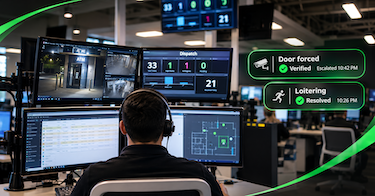
Alarm fatigue is real. A DC can generate nuisance alerts from doors, motion, and environmental conditions. The solution is not to ignore alerts. The solution is to verify quickly and respond consistently.
Build a simple escalation ladder
Your escalation ladder should be short, clear, and usable at 2 a.m.
Example workflow:
Why video verification matters
If your team is not sure whether an alarm is real, response slows down. Video verification reduces uncertainty and helps your team act with confidence.
If you want stronger outcomes: define verification time targets and track them as a KPI.
KPIs that show whether your controls are working
A security program improves when it is measurable. These KPIs are practical, easy to track, and directly tied to risk reduction.
Dock KPIs
- Door forced events per month (by door)
- Door held open events per month (by door and shift)
- After-hours door opens (by zone)
- Time from alert to video verification
- Time from verification to response action
Yard KPIs
- Gate exceptions (tailgating, after-hours entries, manual overrides)
- Unknown vehicle entries (if you track plates)
- Trailer dwell time (by row or zone)
- Trailer movement exceptions (moves without clear authorization)
- Perimeter alerts by location (helps identify weak perimeter segments)
Systems health KPIs
- Camera uptime percentage in critical zones
- Recording retention actual versus policy
- Percentage of critical doors reporting accurately
- Open work orders and average time to repair
A practical implementation roadmap that does not disrupt operations
Most facilities do better with phased improvements. Start with process and visibility, then strengthen controls, then integrate.
Phase 1: Immediate wins
- Define door rules and after-hours zones
- Improve lighting in key yard and dock areas
- Fix camera blind spots and ensure retention is adequate
- Write a simple response playbook and train the right people
Phase 2: Control the edges
- Gate verification workflow and exception logging
- Improved dock camera views and staging area coverage
- Access control for high-value zones
- Seal control process for high-value outbound loads
Phase 3: Integrate and optimize
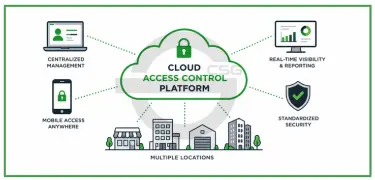
- Connect video, access events, and alarms into a unified workflow
- Add analytics where they reduce search time or support verification
- Establish monthly KPI reviews and continuous improvement
- Commission, test, and lock in a maintenance rhythm
Common mistakes that quietly break DC security
These show up in almost every facility that struggles with theft, shrink, or repeated incidents:
- Cameras without purpose: lots of footage, no answers during an incident
- Undefined ownership: alerts happen, but nobody owns the response
- Too many exceptions: “just this once” becomes normal behavior
- Weak evidence handling: clips not preserved, timelines hard to prove
- Maintenance drift: cameras go down, doors misreport, storage fills up
Quick checklists
Dock security checklist
- Doors are assigned and aligned to appointments where practical
- Door forced and door held events are monitored for critical doors
- High-value staging is separated and access is controlled
- Seal numbers are logged, verified, and photographed for high-value loads
- Cameras provide both context views and identity views
- Exceptions are documented, not ignored
Yard security checklist
- Gate entry and exit follow a consistent verification process
- Tailgating is addressed with procedure and design
- High-value trailers are placed in best-lit, best-visibility zones
- Trailer dwell time is tracked and reviewed
- Perimeter coverage includes corners and dark rows
- Unauthorized trailer movement is flagged and investigated
Incident response checklist (first 30 minutes)
- Verify the event with video
- Secure doors, gates, and affected zones
- Notify the correct owner and dispatch response if confirmed
- Preserve video and log the timeline
- Document vehicle details, seal details, and involved personnel
- Perform a quick post-incident system check (door states, camera status)
A few FAQs people ask when they are new to warehouse security
“Do we need cameras everywhere?”
Not usually. You need cameras where decisions and handoffs happen: gates, dock doors, staging zones, and critical interior areas. The best camera plan is the one that answers questions quickly during an incident.
“What’s the first thing we should fix if we are seeing theft?”
Start with the dock-to-trailer handoff and outbound staging controls. Those are common hotspots. Then tighten gate verification and trailer movement accountability.
“How do we keep this from slowing the warehouse down?”
By designing security around workflow. The best DC security supports operations with clear rules, fast verification, and fewer exceptions, not more steps for everyone.